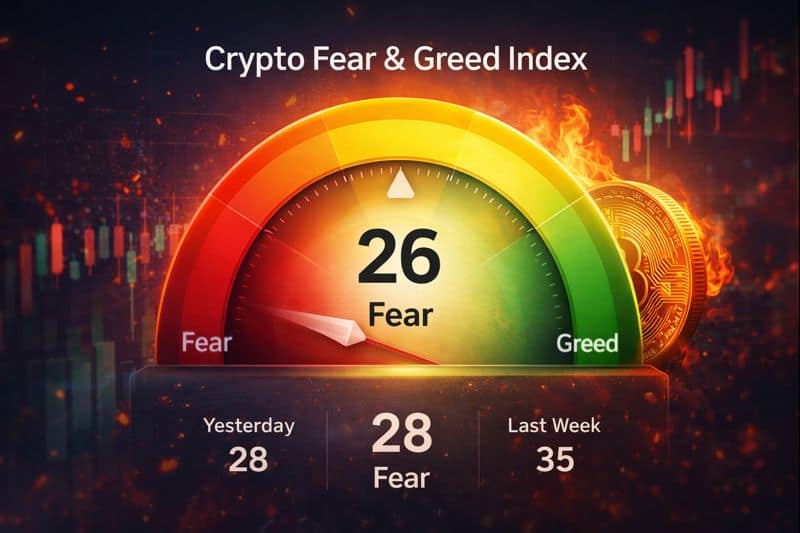
Crypto market cycles may look chaotic on the surface, but underneath lies a repeating pattern driven by whale behaviour, investor psychology, and on-chain data. Understanding these forces explains why retail traders often enter late, panic early, and miss the most profitable phases of the cycle. This Sunday deep-dive breaks down how crypto market cycles work, how whales move silently, and what long-term investors understand that most retail traders don’t.
Why Understand Crypto Market Psychology and Crypto market cycles
Crypto market cycles are highly emotional. Unlike traditional markets, they trade 24/7 and react instantly to news, social media, and sentiment shifts.
Fear and Greed Drive Decisions
At the core of every crypto cycle are two emotions:
- Fear → Selling pressure, hesitation, panic exits
- Greed → Overconfidence, FOMO buying, leverage
Retail traders usually react after price moves. Experienced investors often act before sentiment shifts become obvious.
What is the Role of Whales in Market Cycles
Whales — large holders with deep capital — play a major role in shaping price structure and liquidity.
Accumulation Happens Quietly
- Low volatility
- Sideways price action
- Weak sentiment
- Little media attention
This is when whales accumulate. Retail interest is low, and many traders lose patience and exit.
Distribution Follows Euphoria
- Strong rallies
- Positive headlines
- Social media hype
- Retail participation peaks
Whales gradually sell into strength while retail traders chase momentum.
Retail Traders vs Long-Term Investors
Different market participants behave very differently during cycles. Retail Traders
Retail traders often:
- Buy after sharp rallies
- Sell during pullbacks
- Overtrade volatile moves
This emotional cycle leads to repeated losses.
Long-Term & Institutional Investors
Long-term investors focus on:
- Risk management
- Gradual accumulation
- Macro trends and on-chain data
They plan entries and exits well before market extremes.
Did It Really Match Bitcoin’s Entire Market in a Single Day?:
How On-Chain Data Reveals Smart Money Moves
On-chain metrics help identify what large players are doing behind the scenes.
Key Signals to Watch
- Whale accumulation during fear phases
- Declining exchange balances (long-term holding)
- Rising stablecoin inflows (future buying power)
No single metric predicts price, but combined signals often reveal market intent.
The Full Bitcoin Market Cycle Explained
Most crypto cycles follow a familiar structure:
Accumulation – Fear, low interest, sideways movement
Breakout – Momentum builds, sentiment improves
Euphoria – Rapid gains, retail FOMO peaks
Distribution – Smart money exits quietly
Correction / Crash – Sentiment resets, fear returns
Understanding this cycle helps investors avoid emotional decisions at extremes.
What Current Market Behaviour Suggests — Is This Silence Before a Breakout?
Periods of rising fear, fading enthusiasm, and low retail excitement often confuse market participants. Many assume that when volatility cools and headlines slow down, momentum has died.
But historically, crypto markets do not collapse in silence — they consolidate.
When:
- Trading volumes shrink slightly
- Social media excitement fades
- Retail speculation cools
Markets often enter a digestion phase, not a breakdown.
In previous cycles, similar conditions appeared right before major directional moves. Consolidation periods allow:
- Weak hands to exit quietly
- Stronger capital to accumulate
- Structural support levels to strengthen
Big moves rarely begin when everyone is watching.
They usually emerge when attention drops and emotional extremes fade.
The current structure suggests a pause — a recalibration of positioning — rather than exhaustion of the broader trend.
Smart capital tends to prepare during quiet phases.
Retail attention usually returns later.
This behavioral pattern is not new.
It’s cyclical.
And understanding that cycle changes how investors interpret short-term calm.
Why Crypto Whales Move $1.6 Billion in Hours, Putting the Market on Alert:
Understanding This Cycle Helps Investors Avoid Emotional Decisions
Crypto markets are driven by psychology as much as technology.
Fear spikes.
Greed expands.
Then comes fatigue.
Right now, the market shows signs of fatigue — not panic.
That distinction is critical.
Emotional decisions often happen at extremes:
- Buying aggressively during hype
- Selling impulsively during fear
- Overreacting to short-term volatility
But cycles reward patience.
Historically, markets that enter controlled consolidation phases often transition into stronger directional moves once:
- Liquidity stabilises
- Sentiment resets
- Leverage clears
Instead of reacting emotionally to slower price action, experienced investors focus on structure.
They ask:
Is the market breaking down?
Or is it building energy?
So far, data supports the second interpretation.
Final Conclusion — Where Does the Market Truly Stand Now?
Crypto market cycles are shaped by three powerful forces:
- Whale behaviour
- Retail participation
- On-chain and liquidity signals
When all three align, major trends form.
At present:
- Whale positioning appears strategic, not reactive
- Retail interest is cooling, not collapsing
- On-chain flows suggest preparation, not exit
Short-term price movement may remain unpredictable — that’s normal in transitional phases.
But structurally, the market does not reflect distress.
It reflects compression.
And compression often precedes expansion.
The broader cycle remains intact.
The key is understanding where the market sits within that cycle.
Right now, the evidence points to consolidation inside a larger trend — not the end of one.
Markets rarely announce their next big move in advance.
They build toward it quietly.
And those who understand the cycle often recognize the shift before the headlines do.d to survive and succeed long term.
Disclaimer:The information provided on www.globalcrypto.com is for educational and informational purposes only and should not be considered financial or investment advice. Please do your own research before making any financial decisions.