Gold has once again taken center stage in global markets, delivering a move that stunned investors across asset classes. In a single day, gold added nearly $165 billion in market value, a figure that closely mirrors Bitcoin’s entire market capitalisation. The sudden surge didn’t just push gold prices higher—it reignited a broader debate about where capital is flowing in an increasingly uncertain macro environment. As risk sentiment shifted, the contrast between traditional safe-haven assets and digital risk assets became impossible to ignore.
Why Did Gold Suddenly Take Center Stage Across Global Markets?
Gold’s sharp rally didn’t happen in isolation. The move was driven by a convergence of macro forces that pushed investors back toward safety. Renewed safe-haven demand, rising geopolitical uncertainty, and growing expectations of monetary easing combined to accelerate capital inflows into gold. Within days, gold broke above $3,500, setting fresh all-time highs and extending gains of more than 27% in a single week. Unlike speculative spikes, this rally showed signs of depth—backed by institutional flows rather than retail momentum.
What Happened to Bitcoin While Gold Was Surging?
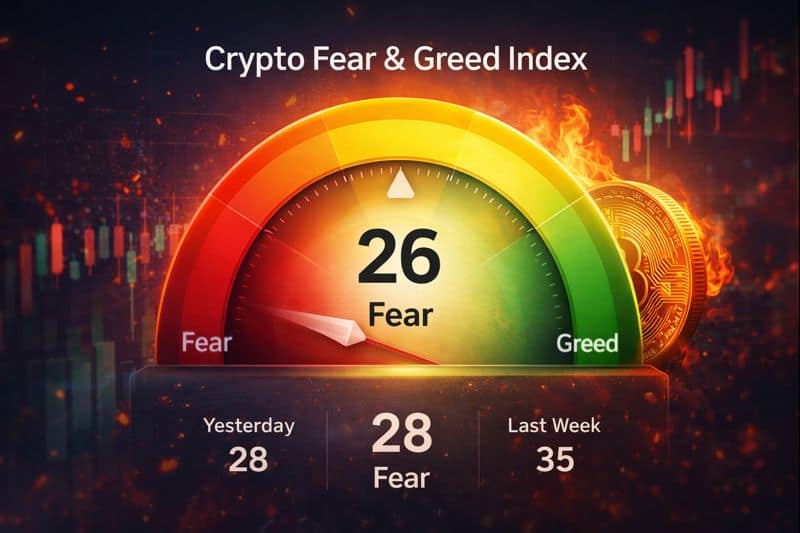
While gold strengthened, Bitcoin failed to hold upside momentum, slipping more than 4.4% within 24 hours. Liquidity tightened across crypto markets, and investors rotated capital away from high-risk assets.
This divergence highlighted a growing short-term preference for capital preservation over speculation. Bitcoin’s decline didn’t signal structural weakness, but it did reflect changing priorities as volatility resurfaced across global markets.
Is Capital Quietly Rotating Away From Crypto Into Gold?
The answer, at least in the short term, appears to be yes. As gold gained headlines, capital flowed steadily into traditional defensive assets. Bitcoin struggled to attract incremental buyers, and broader crypto markets showed signs of consolidation rather than expansion. This rotation suggests investors are temporarily prioritising stability, liquidity, and historical reliability—areas where gold has long dominated.
Does This Mean Bitcoin Is Becoming Undervalued Relative to Gold?
Despite near-term weakness, analysts argue Bitcoin’s long-term structure remains intact. Bitcoin still trades roughly 75% above its five-year lows, remains supported by long-term institutional adoption, and continues to benefit from macro liquidity trends. While gold currently leads the narrative, Bitcoin’s under performance may reflect timing rather than diminishing relevance. Some institutions even suggest the current gap between gold and Bitcoin could present relative value opportunities if risk appetite returns.
Is BTC Heading Toward a Critical Breakdown Zone?:
Why Are Institutions Closely Watching This Gold–Bitcoin Split?
Institutional investors are paying close attention to whether capital continues flowing into safe assets or rotates back into growth and innovation.
Key questions being monitored include:
- Will capital keep flowing into gold as macro uncertainty persists?
- Can Bitcoin stabilize near key technical levels?
- How will global liquidity conditions evolve in coming weeks?
For institutions, this divergence is viewed as a temporary imbalance, not a permanent shift.
Is This Gold Dominance a Short-Term Shock or a Structural Change?
History suggests extreme one-day moves often signal transitional phases, not long-term dominance. Past cycles show gold frequently outperforms during periods of uncertainty, while Bitcoin and risk assets tend to follow once confidence stabilises. The widening performance gap is being interpreted as a signal of caution, not a rejection of digital assets. Markets may simply be resetting before the next directional move.
What Happens Next If Gold Keeps Leading the Market?
If gold maintains momentum:
- Risk assets could remain under pressure
- Capital may stay defensive
- Bitcoin could continue consolidating rather than trending
However, if macro conditions stabilise or liquidity improves, Bitcoin could regain attention—especially if gold momentum slows. Markets are now at a crossroads, with gold setting the tone and Bitcoin waiting for its next catalyst.
Why Is Leverage Reduction a Key Signal Right Now?:
Why This Matters for Global Investors Right Now
Extreme one-day moves like this often define capital allocation trends before price charts do. The spotlight is currently on gold—but Bitcoin remains part of the conversation. The interaction between these two assets offers insight into investor psychology, risk tolerance, and macro expectations. For now, gold is leading the narrative. Whether Bitcoin follows—or diverges further—will shape the next major phase for both traditional and digital markets.
The spotlight is on gold — but Bitcoin isn’t out of the conversation.